
KSAOC
Kawahara Yukio Shihan was the first technical director of the Canadian Aikido Federation and had a major influence on aikido in Canada. ( Profile )
This award is meant to show appreciation to other exceptional aikidoists for their subsequent contribution to Canadian aikido while honouring Kawahara Shihan’s legacy through their service to the CAF.
As a “lifetime” recognition of a career, the award is limited to persons who are no longer active in Canadian aikido and were members of the CAF in good standing at the time of their retirement. Recipients will have consistently demonstrated good character, leadership and organizational abilities in helping to advance aikido in Canada through teaching, association service and technical ability.
2023 recipient

Nominee 9
2022 recipient
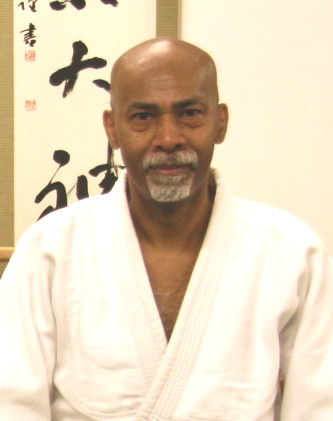
Cecil Paris
2022 recipient
Cecil Paris
Previous recipients

Dennis Adair

Shin Chin
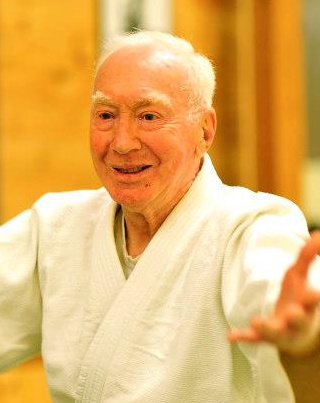
Bill Collins

Hiroaki Izumi

Paul Martin
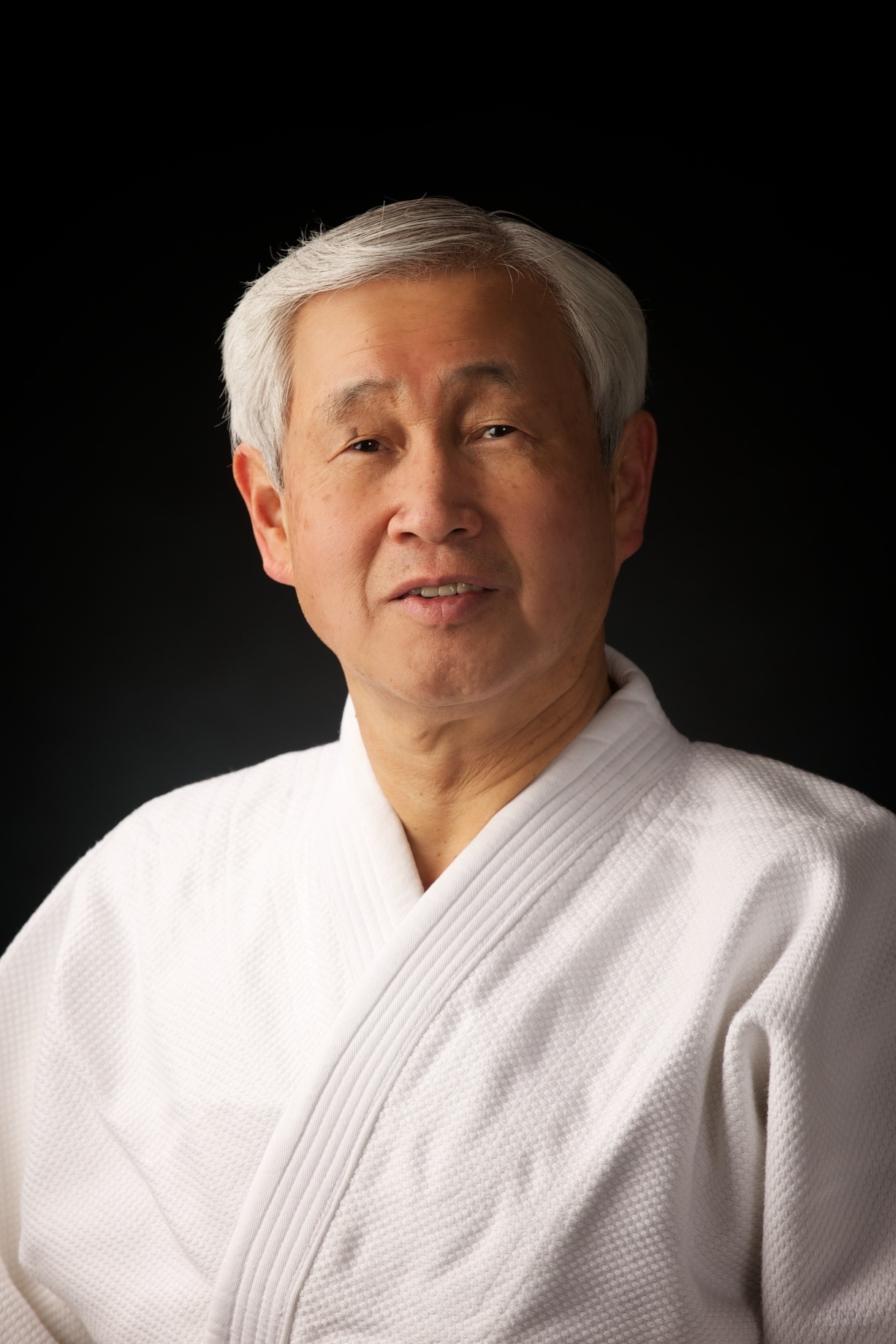
Osamu Obata

Fran Turner

Certificate
Cecil Paris
Biographical Summary
- Started aikido with Richard Ostrofsky Sensei at Downtown YMCA in Montreal. Then became a student at Ishiyama Sensei’s Aikido Kensankai Dojo (at Shidokan School of Martial Arts in Montreal) for two years before Ishiyama Sensei invited Kawahara Sensei to Canada to take over his dojo and start promoting aikido in Canada.
- Assisted Ishiyama Sensei in preparing immigration papers and making necessary living arrangements for Kawahara Sensei in 1976. Played a significant role in helping Kawahara Sensei settle and feel at home in Canada. Followed him to Vancouver in 1978, studied closely with him as his master teacher at Vancouver Aikikai (at Renfrew Community Centre).
- Taught aikido in Abbotsford in the 1980s, later opened New Westminster Aikikai while continuing his study with Kawahara Sensei for many years. Promoted to shodan in 1977 then successively attained other ranks, becoming 6th dan in 2007.
- Participated in various public demonstrations with Kawahara Sensei, travelling with him widely and developing a close friendship. Attended all BC and CAF summer camps taught by Kawahara Sensei, remaining one of his most loyal and dedicated students for 35 years until the latter’s passing in 2011.
Accomplishments/Contributions
- Practiced and taught aikido for over 40 years. Assisted and worked closely with Kawahara Sensei for over three decades. Often invited to instruct at seminars and summer camps in BC. Was a regular guest instructor at annual spring and fall seminars hosted by Ishiyama Sensei in Vancouver and participated in kyu and dan tests for over three decades. Highly respected for his powerful and graceful aikido and his tireless dedication to his students and Kawahara Sensei’s mission of promoting aikido in Canada.
- Travelled with Kawahara Sensei to Osaka and Tokyo (including meetings with Doshu), participated in aikido classes and a demonstration led by Kawahara Sensei while in Japan.
- A founding member of the British Columbia Aikido Federation, assisted Ishiyama Sensei in developing and formally establishing the BCAF in 1984 with Kawahara Sensei as its official technical director. Totally committed to expanding the BCAF and solidifying Kawahara Sensei’s leadership role in BC and across Canada. Played a significant role in Kawahara Sensei being recognized and honoured as a true traditional master of aikido in Canada and around the world.
- Invited to become a founding member of the CAF Examination Committee in 2012, served as a valued member for seven years until semi-retirement. His supportive contribution over the years was highly recognized and appreciated by all committee members.
Personal Philosophy
- Thoroughly adept at the basic forms, often taught well beyond the basics with high expectations of inculcating students with the essence of aikido.
- It is essential that uke react instantly and instinctively, reading nage’s intent. Aikido at its best relies on very natural movements; uke should not experience any force but still sense nage’s ki dominating the situation. This way uke will also react in a fluid and natural manner without resistance.
- Through dedicated training and practice on and off the mat, in weapons and in aikido forms, one develops the essence of aikido.
- His focus and awareness of everything around him was phenomenal. Projecting a very natural but exceptional martial presence, he could thus master every situation.
Certificate
Dennis Adair
Biographical Summary
- Began aikido in 1972 with Bruce Stiles at Toronto Aikikai (shihan: Yoshimitsu Yamada, Mitsunari Kanai), received shodan in 1978.
- After Stiles Sensei left (c. 1982), was among senior yudansha who set up teaching schedule and ensured dojo had administrative structure and officers as required by provincial government and Ontario Aikido Federation.
- Moved to Nova Scotia in 1987, practiced at Halifax Aikikai (shihan: Yukio Kawahara).
- Chief instructor at Halifax Aikikai 1988-98, then returned to Toronto (practicing at Aikido Hokuryukai).
Achievements/Contributions
- Toronto Aikikai board member.
- Participated in planning and carrying out many aikido demonstrations over the years.
- Strove tirelessly to expand reach of aikido in Atlantic region, e.g., worked with Halifax Aikikai and Antigonish Aikikai to organize local teaching events with Kawahara Shihan and other guest instructors.
- As CAF president 1996-98, succeeded in collaboration with vice-president Shin Chin in getting a thoroughly revised non-profit federal constitution passed by CAF and approved by government of Canada.
Personal Philosophy
- One of the first values aikido taught me was dojo etiquette: respect for the founder with a bow, respect for others by bowing during class.
- Aikido teaches us how to breathe as we move and this leads to developing calmness, which helps handle stress in everyday life.
- During practice students are being thrown to the mat or spinning around. This chaos teaches us to be aware of what is occurring around us, part of the mind and body harmony we learn in each technique.
- The other part is uke learning how absorb a fall through the art of ukemi. During my life I have used ukemi in a number of ways.
- I certainly learned about humility, e.g., when nage properly applied wrist techniques on me.
- Patience as an instructor is important, students learn at their own pace. If they need help after class, stay and work with them.
Certificate
Shin Chin
Biographical Summary
- Started aikido in Saskatoon in 1981 with Hiroaki Izumi.
- Moved to Newfoundland in 1985, joined Memorial University aikido club (instructors: Michael Langford, Leslie Mulholland).
- By early 90s, was chief organizer for the club and teaching alongside Al Skehan.
- Developed close relationship with Kawahara Shihan, regularly travelling to his seminars and camps and also regularly bringing him to Newfoundland.
- Received shodan from Yamada Shihan in 1993.
- Was chief instructor at Memorial University aikido club from late 1990s until retiring in 2020.
- Promoted to godan by Osawa Shihan in 2014.
- Is a CAF shidoin.
Achievements/Contributions
- Apart from running the Memorial University aikido club for over 20 years, was a member of the CAF board in the early 1990s.
- Played a key role in completely revising the CAF’s non-profit constitution as requested and subsequently ratified by the government of Canada.
- In 2005, led organizing of first Atlantic Canada summer camp with Kawahara Shihan. This became a biennial event (with subsequent camps held in Nova Scotia), the first Canadian summer camps to be held outside of BC.
Personal Philosophy
- As a long-time and loyal student of Kawahara Shihan, strongly believes in practice that is focused on the basics, the importance of staying true to the art’s martial roots and understanding aikido from that perspective.
- However, also believes in aikido’s role as a modern martial art that works to develop physical and mental health and build and maintain strong social ties both within the dojo and across the country.
Certificate
Bill Collins
Biographical Summary
- Aikido pioneer, more than 50 years practicing and teaching aikido, first Canadian to receive aikido shodan in Canada.
- Received shodan in 1968, rokudan in 2011.
- Co-founder of Toronto Aikikai along with Bruce Stiles and Henry Kono.
- Taught at Toronto Aikikai, JCCC Aikikai, Toronto Beaches Aikikai (home dojo), Aikido Shugyo Dojo.
- Traveled to Hombu Dojo several times; trained with Kisshomaru Ueshiba Doshu and numerous shihan: Takeshi Kimeda, Koichi Tohei, Morihiro Saito, Sadateru Arikawa, Yoshimitsu Yamada, Mitsunari Kanai, Kazuo Chiba, Yukio Kawahara, Seiichi Sugano, Akira Tohei.
- Taught and demonstrated aikido across Canada and in USA, South Africa, Canary Islands and Bermuda.
Achievements/Contributions
- First CAF president, 2 terms.
- Instituted CAF’s first series of policies and constitution in collaboration with other CAF executives.
- Ontario Aikido Federation president, multiple terms.
- Canada’s representative to the International Aikido Federation (IAF) in 1980.
- Demonstrated aikido for Amnesty International, Aikido Expo Toronto.
Personal Philosophy
- Aikido is self defence, not fighting. Only once you have learned the self defence aspect of aikido can you begin to understand the message of aikido. Aikido does not teach you how to fight, it teaches you how to move your body in case you need to defend yourself.
- Aikido technique is like a roof, if there is a single tiny hole then the water will seep in; that is why you must always work to perfect your aikido technique.
- There is aikido and aikido technique, they are different. One can have excellent aikido but poor technique. Aikido happens after you have forgotten all the techniques you have been taught.
- If you focus on precision, you will eventually come to technique, but if you only focus on technique you will never be precise.
- You must always think about aikido and not just practice. If you don’t think about what you are doing, your practice will be useless.
Certificate
Hiroaki (Rocky) Izumi
Biographical Summary
- Began aikido in 1978 as one of Makoto Ohtsu’s early students at University of Saskatchewan aikido club; was club’s first secretary.
- Became head instructor when Ohtsu Sensei went on Japan sabbatical.
- Received shodan in 1985 from Kawahara Shihan.
- Moved to Texas in 1985, formed Lubbock dojo, developed connections with Akira Tohei Shihan in Chicago.
- Moved to Hong Kong 1991-94, instructed aikido there.
- Returned to Saskatchewan in 1994, started Regina aikido dojo.
- Received rokudan c. 2010, recommended by Kawahara Shihan.
- Passed away in 2013.
Achievements/Contributions
- Early aikido pioneer, appointed “dai sempai” (main assistant instructor) by Ohtsu Sensei, first aikido shodan in Saskatoon.
- In 1990, was main demonstration uke during Kawahara Sensei’s first seminar.
- Received nikyu from Kawahara Shihan after just two years of training.
- Instrumental in furthering relationship between Akira Tohei Shihan and Kawahara Shihan.
- Hosted joint seminar (both shihan) in Regina in late 1990s, largest ever in Saskatchewan. Tohei Shihan subsequently invited Kawahara Shihan to Midwest Aikido Federation summer camp; many MAF students have since regularly attended CAF summer camps.
- Introduced aikido to many people around the world; taught in Barbados, other Caribbean dojos, Dubai, Romania and several other cities in Canada. This again led to more students learning from Kawahara Shihan.
Personal Philosophy
- Dedicated his life to the practice of aikido, found aikido can be a connecting force for all walks of people regardless of gender, racial or cultural differences.
- Learned from Kawahara Shihan that aikido is a pure martial art and by practicing the basic principles of “awase” (blending/harmonizing), aikido can be very effective.
- Also, by following Kawahara Shihan’s emphasis on “nagare” (flowing), one’s energy becomes very dynamic.
- Enjoyed teaching newcomers as much as experienced students, was approachable to all and provided instruction to anyone interested, would also do himself whatever he asked others to do.
Certificate
Paul Martin
Biographical Summary
- Began aikido in Vancouver in late 1970s under Kawahara Shihan.
- Obtained shodan in 1985, nidan in 1990 and sandan in 1999.
- Taught at various dojos, including North Vancouver and Vancouver Aikikai (initially Kawahara Shihan’s own dojo).
- Was a trusted senior supporter of Kawahara Shihan and his efforts to spread aikido in BC and Canada.
- Passed away in 2012.
achievements/contributions
- Played a pivotal role in building the BCAF and CAF organizations under Kawahara Shihan’s guidance, held a number of senior leadership roles, including BCAF president 1992-97.
- Provided continuous senior organizational leadership for seminars and summer camps as aikido grew in BC and Canada.
- Taught at summer camps; organized and taught seminars in his own dojos, many with Kawahara Shihan.
- Helped form many generations of aikido students as an outstanding teacher.
Personal Philosophy
- Saw aikido as a true budo, a way to develop the mind and body in unison, and foster friendship rather than strife both on and off the mats.
- Focused on the essence of techniques and discarded all superfluous elements, embodying both the spirit of budo and the spirit of Kawahara Shihan’s teachings.
- Approached practice with a simple, curious and open mind, regardless of whom he was practicing with. Exemplified what Kawahara Shihan once described as “quiet practice”, i.e., practicing silently with a quiet mind and allowing the body to learn by doing techniques attentively, without distractions, pride or worrying about mistakes.
- Focused on effectiveness and purity of execution, never used physical strength as a shortcut to cover for defective technique or to dominate a partner inappropriately.
- His humility and sense of humour helped students relax and thus learn more quickly.
- Was able to continue teaching well into his illness and was an extraordinary example to others of maintaining a positive spirit in the face of adversity.
Certificate
Osamu Obata
Biographical Summary
- Began aikido under Shigeho Tanaka Shihan of Meiji Jingu Shiseikan in Tokyo, awarded shodan in 1968.
- Moved to Canada in 1972, became senior instructor for the JCCC Aikikai.
- Worked for Consulate-General of Japan in Toronto, 1973-2011.
- Promoted to 7th dan in 2003.
- Awarded title of Shihan by Hombu Dojo in 2012.
Achievements/Contributions
- Was a founding member of the CAF examination committee until his retirement and return to Japan in 2018.
- Taught at CAF summer camps and seminars.
- Organized seminars at JCCC with high-ranking teachers (Yamada Sensei, Kanai Sensei, Kawahara Sensei, Tanaka Sensei, Shimamoto Sensei, etc.).
- Was a founding member of the annual International Friendship Seminars, alternating each year among Canada, the UK, Singapore, and Belgium.
- Invited to teach seminars internationally in the UK, Singapore, Romania, Jamaica, Holland, and Belgium.
- In 1993, received a volunteer service award from government of Ontario for 15 years of contribution as instructor at JCCC Aikikai. In 2017, was recognized with the Ishizue Award from the Japanese Canadian Cultural Centre.
- In 2018, was awarded the Order of the Sacred Treasure, Gold and Silver Rays, by the Emperor of Japan regarding his long-term service for the Consulate-General of Japan in Toronto and his contribution to society in Canada.
Personal Philosophy
- Was drawn to aikido by its philosophical side: aikido is a martial art that originated from fighting techniques but stands for harmony and the peaceful resolution of conflict.
- Emphasizes that the purpose of aikido is “jita-ittai” (to improve together). Students practice as partners, helping each other to learn.
- His philosophy in teaching aikido as “wa no budo” (budo of harmony) was passed on by Tanaka Shihan, where practicing aikido should never be competitive sport against others but should strengthen one’s own mind and soul instead.
Certificate
Fran Turner
Biographical Summary
- First started aikido in Copenhagen, 1973.
- Trained in Toronto with Bruce Stiles (student of Mitsunari Kanai), 1974-79.
- Practiced in Washington, DC with Clyde Takeguchi, 1979-83.
- Awarded shodan, 1981.
- Taught aikido at YMCA and Toronto Board of Education for several years, set up extra-curricular classes at Ryerson.
- Established Aikido Shugyo Dojo at dedicated location under board of directors in 1985, chief instructor over 30 years.
- Promoted to 6th dan, 2011.
Achievements/Contributions
- Ontario Aikido Federation board positions, including one term as president.
- CAF board member (one term); was also member of CAF examination committee.
- Arranged many regional and local seminars with attendees from Ontario, Quebec and US; featuring Yukio Kawahara, Yoshimitsu Yamada, Clyde Takeguchi, Mary Heiny, Donovan Waite and others.
- Co-organized 3 annual Focus on Women seminars in Toronto and Montreal in mid-1980s featuring female instructors, widely attended by men and women.
- Aikido Shugyo Dojo hosted Aikido-L international seminar in 2000, and many mini-seminars and classes with local teachers over the years.
- Also hosted 2015 CAF summer camp, first to be held in Ontario.
- Organized public demonstrations, was featured on Breakfast Television, gave radio interviews on CIUT Radio and CBC.
- In 1991 led group of students to travel with Yamada Shihan to train at Hombu Dojo, Tokyo.
Personal Philosophy
- Drawn to aikido by shihonage, really relates to the way its mechanics show how to move the body because she was a dancer; also by the idea of resolving conflict and aikido being a spiritual quest for O-Sensei.
- Aikido develops physical awareness, grace and sensitivity to others.
- Through awareness of relationships with other physical bodies, aikido becomes a tool for helping people get along with one another in the world.
- The work of the dojo is to teach physical manifestations of aikido in creating a supportive community to help people grow.